西悉尼大学护理硕士Critical Review作业怎么写?
我在西悉尼大学读护理硕士,最近要写一篇Critical Review作业,请问应该怎么写?这类作业我之前写的比较少,但因为这次作业成绩占比高,所以我想找老师辅导。
最佳答案
-
 课程顾问-小管家 2026-01-18 16:04:31立即咨询
在西悉尼大学攻读护理硕士期间,Critical Review是一项常见的学术作业,主要考察学生的批判性思维、文献分析能力以及对护理实践的学术理解。撰写Critical Review不仅要求你对相关文献进行深入分析,还需运用批判性思维评价研究的质量和临床应用价值。以下是关于Critical Review的写作要求、基本结构和评分标准,希望能帮助你顺利完成作业。
一、Critical Review的主要目标
1. 培养批判性思维:不仅仅是总结文章,而是深入分析其优缺点。
2. 提升护理实践能力:评估研究的临床相关性,并思考如何应用于实际护理工作。
3. 锻炼学术写作技能:锻炼逻辑表达、文献分析及学术语言使用能力。
二、Critical Review的基本结构
通常,Critical Review的篇幅在1500-2500字之间,主要包括以下部分:
1. 引言(Introduction)
字数占比:10-15%(约150-250字)
- 简要介绍文章的主题和研究背景。
- 说明你选择批判性分析的文章,并提供完整的引用信息(作者、年份、文章标题、期刊名称等)。
- 提出Critical Review的核心观点,即你对该研究的整体评价。
✅ 示例:
"In contemporary nursing practice, evidence-based research plays a crucial role in improving patient outcomes. The selected study by Smith et al. (2023) examines the impact of nurse-led interventions on post-operative recovery. This review critically evaluates the study's methodology, findings, and clinical implications to assess its contribution to nursing practice."
2. 文献综述(Background & Literature Review)
字数占比:15-20%(约250-400字)
- 介绍该研究所在的学术背景,即该领域的现有研究情况。
- 解释研究主题的重要性,以及为何需要进一步探讨。
- 可引用其他相关研究,以展示该研究的独特性或局限性。
✅ 示例:
"Previous studies have highlighted the significance of nurse-led interventions in improving patient care. However, there is limited research on their long-term effectiveness in post-operative recovery. This study aims to fill this gap by exploring patient outcomes after receiving targeted nursing interventions."
3. 研究方法(Methodology)
字数占比:20-25%(约300-500字)
- 研究设计(如定量研究/定性研究/混合方法)。
- 数据收集方式(如问卷调查、访谈、病例研究)。
- 样本选择(是否具有代表性,样本量是否足够)。
- 数据分析方法(统计分析、主题分析等)。
- 评价这些方法的可靠性和有效性。
✅ 示例:
"The study employed a randomized controlled trial (RCT) design, which is considered the gold standard for clinical research. However, the sample size of 50 participants raises concerns regarding statistical power. Additionally, the lack of a diverse population may limit the generalizability of the findings."
4. 研究结果与讨论(Findings & Discussion)
字数占比:25-30%(约400-600字)
- 研究的主要发现是什么?
- 这些发现是否支持研究假设?
- 研究的统计分析是否充分?
- 是否存在偏倚(Bias)或数据解释不充分的问题?
- 结果是否有临床实践意义?
✅ 示例:
"The findings suggest that nurse-led interventions significantly reduced post-operative complications (p < 0.05). However, the study fails to address potential confounding variables such as patients’ baseline health conditions. Additionally, while the results are promising, the lack of a long-term follow-up weakens the study’s overall impact."
5. 研究局限性与建议(Limitations & Recommendations)
字数占比:15-20%(约250-400字)
- 研究的主要局限性是什么?
- 未来研究可以如何改进?
- 研究结果如何更有效地应用于护理实践?
✅ 示例:
"One limitation of this study is its small sample size, which reduces the reliability of the results. Future research should incorporate a larger and more diverse population to enhance external validity. Additionally, a longitudinal study design would provide better insights into the long-term impact of nurse-led interventions on patient recovery."
6. 结论(Conclusion)
字数占比:10-15%(约150-250字)
- 总结研究的核心贡献。
- 强调该研究对护理实践的启示。
- 说明你的Critical Review的最终评价。
✅ 示例:
"Overall, this study provides valuable insights into the benefits of nurse-led interventions. However, methodological limitations, such as small sample size and short follow-up period, reduce its generalizability. Future studies should address these issues to strengthen the evidence base for clinical practice."
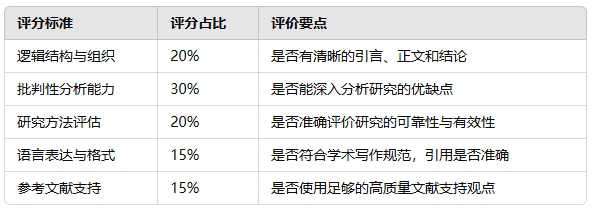
三、Critical Review的评分标准
在西悉尼大学,Critical Review的评分通常依据以下几个标准:
四、Critical Review的写作技巧
1. 使用批判性语言:
- 正面评价:"The study provides a valuable contribution by..."
- 负面评价:"However, the study lacks sufficient evidence to..."
- 建议改进:"Future research should consider addressing..."
2. 结合护理实践:
- 说明研究如何影响临床决策,如护理干预、病人教育、健康政策等。
3. 引用权威文献:
- 使用最新(近5年)的学术论文或系统综述。
- 遵循APA 7th格式引用来源。
4. 避免单纯描述:
- 不只是总结文章,而是对方法、结果和结论进行深入批判。
总的来说,在西悉尼大学护理硕士的Critical Review写作中,关键在于批判性分析。如果你在写作过程中遇到问题,可以直接与考而思的课程顾问联系,以获得一对一西悉尼大学论文辅导。通过辅导,你将在写作中遵循合理的结构、运用批判性思维、结合护理实践,从而撰写出高质量的Critical Review,获得满意的作业成绩。
其他答案


相关回答
解决学业难题!1v1线上辅导——




- 京ICP证:京B2-20211749 京ICP备17021069号
- 京公网安备 11010602104329号
- AAA级诚信经营示范单位
 北京市朝阳区建国门外大街6号大家保险集团B座18层